Repetition is misunderstood. We talk about things being repetitive as if that automatically makes them dull, shallow, or annoying. Same thing again. Same routine. Same lesson. Same song. Same episode. As if repetition is the enemy of growth instead of one of its primary engines.
But repetition is funny that way. Sometimes it drains meaning. Other times, it creates it.
In teaching, repetition is everything. The first time you see a concept, it barely sticks. The second time, it feels familiar. By the tenth time, it starts to make sense. And somewhere around the twentieth or thirtieth time, it becomes part of how you think. That's especially true in technology. You don't really understand programming the first time you write a loop. Or the second. Or even the fifth. But after you've written that same recordset loop or SQL query enough times, something changes. You stop translating it in your head. You stop memorizing it line by line. It becomes instinct. You see the shape of the problem before you even start typing. Repetition turns syntax into intuition, which is the fancy way of saying you stop having to think so hard about it.
That's also why I always tell students to watch a lesson the first time without touching the keyboard at all. Just watch it. Let it wash over you. Get the gist. No pausing, no rewinding, no trying to type faster than your brain. Then watch it a second time and follow along with the examples. You'll get more out of it that way. And if you need to, watch it a third time and actually practice it. Repetition with intention is how learning sticks. Trying to absorb everything in one pass usually just leads to frustration.
That same pattern applies to just about every technical skill. Building computers. Troubleshooting networks. Debugging code. Playing the piano. The first time feels mechanical and fragile. The hundredth time feels solid. Not because the task got easier, but because you changed. Your brain built shortcuts. Your hands learned where to go. You stopped thinking about each step and started thinking about outcomes.
Fitness works the same way, but more literally. You repeat a movement, and at first it feels awkward and forced. You're thinking about where your feet go, where your hands go, whether your back is straight, and whether everyone else in the room is watching you do it wrong. Over time, the movement smooths out. The body learns. Muscle memory isn't a metaphor. It's a real thing. Repetition strengthens neural pathways, coordination, and efficiency. The workout doesn't just change your muscles. It changes how your nervous system communicates with them. Eventually, the movement feels right. Familiar. Even satisfying. You build that mind-muscle connection.
I see this play out in my own daily routine too, and it's something I genuinely enjoy. Most mornings start the same way. Same breakfast. Cereal, coffee, nothing fancy. I make sure the website is still there. I check my email. I knock out customer service replies. I record a video or work on lesson material. Lunch is usually predictable. If the weather's nice, I might jump in the pool with the dogs for a bit before getting back to work. Dinner. Time with the wife. From the outside, that probably looks boring or repetitive. To me, it's grounding. The repetition removes friction so I can focus on what actually matters.
Repetition also deepens relationships. You don't build trust or emotional connection through one big moment. You build it through repeated small ones. Showing up. Listening. Talking. Laughing. Being present. Over time, repetition creates shared context. Inside jokes. Unspoken understanding. The meaning isn't in any single interaction. It emerges from the accumulation.
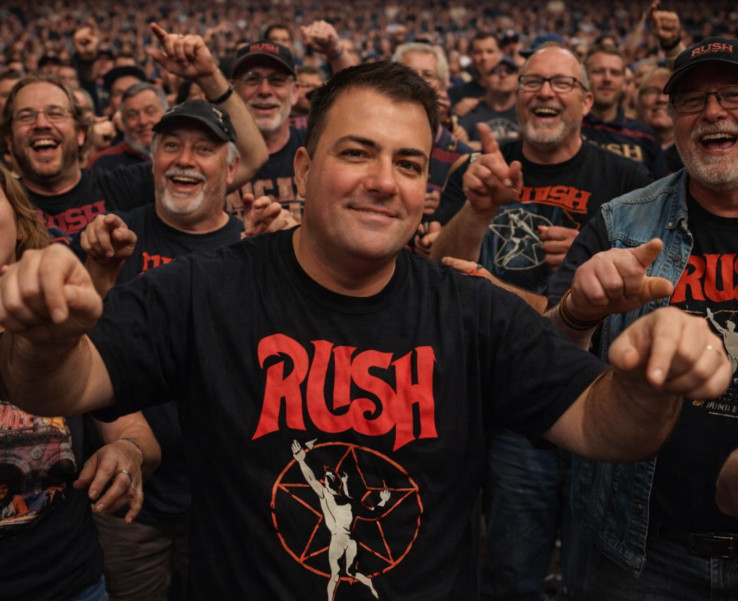
Music might be one of the best examples of this. A song you love often starts as a surface-level experience. The beat hits. The drums kick. The bass locks in. It just sounds good. But then you hear it again. And again. And eventually, you start noticing details you missed. A subtle fill. A harmony buried in the mix. A rhythmic choice that suddenly clicks. With bands like Rush, repetition turns appreciation into admiration. You watch a live performance and see the front row air drumming perfectly in sync, not because they're showing off, but because the music has lived in their heads for decades. And beyond the musicianship, the lyrics start to unfold. Lines you barely noticed at first take on weight.
Stories work the same way. Star Trek episodes are a great example. The first viewing is about plot. What happened. Who did what. Maybe enjoying the special effects. Or the fact that nobody's wearing seat belts on the bridge again. The second viewing brings out the themes. Ethics. Dilemmas. Subtext. By the third or fourth time, you start seeing angles you missed entirely. Not because the writers explained them better, but because you brought more of yourself to the story. Sometimes you even catch layers that the writers may not have consciously intended. That's not overthinking. That's what good storytelling allows. Repetition reveals complexity that was always there.
Of course, repetition can also drain meaning. Advice repeated without context becomes noise. Routines done without intention turn into ruts. Traditions followed out of obligation instead of connection feel hollow. The difference isn't repetition itself. It's engagement. Repetition with curiosity deepens understanding. Repetition without attention numbs it.
I think that's the real dividing line. When repetition is active, it teaches. When it becomes passive, it decays. Doing something over and over isn't what makes it valuable. Being present and engaged while doing it is.
So when people complain that something "feels repetitive," I don't always hear boredom. Sometimes I hear disengagement. Sometimes the meaning is still there, waiting to be noticed again at a deeper level.
Repetition isn't the opposite of growth. In many cases, it's the mechanism. You just have to decide whether you're repeating something on autopilot, or actually at the helm.
LLAPRR

No comments:
Post a Comment