How To Create Configurable System Settings GetSetting And PutSetting In Microsoft Access, Part 3
from Computer Learning Zone News https://599cd.com/AppSettings3
Monday, December 22, 2025

Sunday, December 21, 2025
From Survival to Understanding
Today is the winter solstice, and it is also Rush Day. If you are a Rush fan, you already know why. If not, I wrote about it last year, and I will link to that entry again because it still holds up. Shortest day of the year, longest night, and for Rush fans, 2112 Day. That combination alone is enough to make my brain start wandering, which is pretty much the entire point of these logs and possibly a design flaw.

The solstice is one of those rare moments where the universe does something noticeable on a human timescale. The Sun rises lower in the sky. The days shorten. The shadows stretch out like they are trying to escape. Then, after today, the pattern reverses. The light slowly starts coming back. This is not symbolic. It is measurable. Axial tilt. Orbital mechanics. Predictable to the minute, which is more than I can say for most human systems.
I think about this every year because it helps explain something that often gets oversimplified or mocked. Early humans were not stupid. They were observant. If your survival depended on crops growing, animals migrating, and not freezing to death, you paid very close attention to the sky. When the days kept getting shorter, colder, and darker, it probably looked like the Sun was dying. When that decline stopped and reversed, it looked like a victory worth celebrating. If that sounds familiar, it should. That basic story shows up all over human mythology.
From that perspective, ancient religions did not appear out of nowhere. They were attempts to explain and influence the most important force in a pre-scientific world. Humans did not worship the Sun because they were ignorant. They worshipped it because it controlled everything in their universe. Food. Warmth. Time. Survival. When your life expectancy is measured in decades and winter can kill you, you do not shrug at astronomy. You build rituals around it. After all, we are only immortal for a limited time.
That is why structures like Stonehenge were not accidents. You do not haul massive stones across miles of terrain and line them up with solar events for fun. That is engineering, just without PowerPoint, forklifts, or project managers. Primitive by our standards, sure, but intentional. The same goes for pyramids, temples, and calendars across completely separate cultures. People noticed the same patterns and reached similar conclusions because they were all looking at the same sky.
What early belief systems offered were frameworks for understanding a world that felt dangerous, unpredictable, and often hostile. Stories helped people explain patterns, preserve knowledge, and pass down rules for survival long before science, writing, or formal education existed. Over time, some of those stories solidified into traditions, traditions into institutions, and institutions into systems of power. That transition, from shared explanation to enforced certainty, is usually where things start to get complicated, which humans are exceptionally good at.
This idea always reminds me of a TNG episode called Who Watches the Watchers. In it, a pre-warp civilization accidentally observes advanced Starfleet technology and begins interpreting it as divine intervention. Picard is very clear that this does not make them foolish. It makes them human. When people encounter forces they can observe but not yet explain, belief fills the gap. The episode treats that process with empathy, not ridicule, and makes the same point history does: understanding usually comes later.
This is also where my own perspective tends to diverge from modern religious movements, particularly the ones that treat belief as something to be enforced rather than explored. I have no trouble understanding why belief once played such an important role in helping people make sense of the world. Where I get uncomfortable is when belief is asked to take precedence over evidence in the present day. We have learned a lot since those early stories were first told. Science did not replace meaning, but it did give us better tools for understanding how things actually work. The solstice is a good example. It no longer inspires fear or mystery, but understanding it has not made it any less interesting. If anything, it has made it more impressive, at least to people who enjoy knowing how things work.
At the same time, I understand why so many people find meaning in tradition. Celebrating the return of light, gathering with family, sharing meals, and marking time together are deeply human things, and they connect us across cultures and centuries. Those rituals can be comforting, grounding, and genuinely joyful, especially when good food is involved. Where I personally start to hesitate is when belief hardens into certainty, and certainty starts driving decisions that ignore evidence or cause real harm. That balance matters to me, and I try to stay mindful of it.
There is also a quiet irony today that I enjoy. While we are marking the shortest day up here, Antarctica is experiencing its longest days of the year. Penguins are probably just as aware of that seasonal shift as any ancient human ever was, and likely better dressed for it. They live by rhythms and patterns that matter for survival, even if they do not write them down or build stone circles about them. And somewhere along the way, I like to imagine there are a few very serious penguin scientists quietly keeping track of it all. Further research is clearly required.
So today I will enjoy Rush Day, appreciate the turning of the planet, and quietly thank the scientists who helped us understand what is actually going on out there. The Sun did not die. It will continue to brighten our skies for a few billion more years. We just needed a few thousand years to figure that out.
LLAP
RR
Quick Queries #71
Why Microsoft Access Suddenly Asks for a Parameter You Never Created. QQ #71
from Computer Learning Zone News https://599cd.com/QQ71
from Computer Learning Zone News https://599cd.com/QQ71
Saturday, December 20, 2025
Install .NET 10
Install .NET 10 by Alex Hedley
from Computer Learning Zone News https://599cd.com/3782
from Computer Learning Zone News https://599cd.com/3782
Thursday, December 18, 2025
App Settings 2
How To Create Configurable System Settings GetSetting And PutSetting In Microsoft Access, Part 2
from Computer Learning Zone News https://599cd.com/AppSettings2
from Computer Learning Zone News https://599cd.com/AppSettings2
Wednesday, December 17, 2025
App Settings
How To Create Configurable System Settings Using GetSetting And PutSetting In Microsoft Access
from Computer Learning Zone News https://599cd.com/AppSettings
from Computer Learning Zone News https://599cd.com/AppSettings
Tuesday, December 16, 2025
Happy Holidays Means Everyone
I got another email today telling me I'm being "woke" because I say "Happy Holidays" instead of "Merry Christmas." I was scolded, as if this were a serious moral failing that needed correction. This happens every year or two, and every time it catches me slightly off guard, mostly because it feels like we are having the same argument on an endless loop, as if nothing new has been learned since the mid-2000s when Bill O'Reilly launched his whole "War on Christmas" crusade on Fox News.
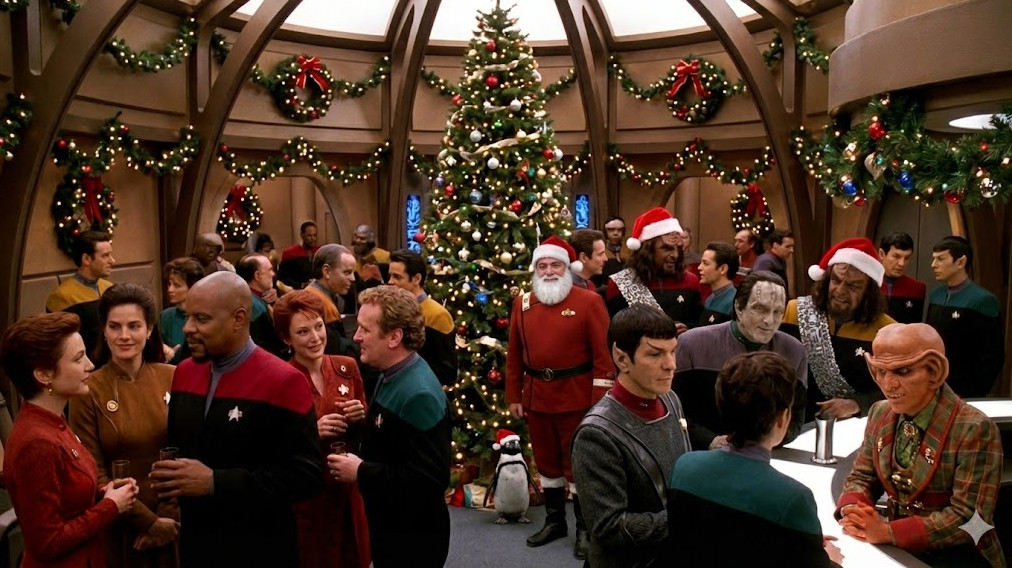
I grew up celebrating Christmas. I loved it. Family, food, decorations, staying up too late, getting up too early, all of it. When my kids were little, we did the whole thing too. Santa, presents, the works. Even now, my wife and I still decorate the house, put up lights, and enjoy the general vibe of the season. None of that disappeared from my life because I sometimes say "Happy Holidays." This is not an either-or situation, no matter how hard some people want it to be.
The reason I use broader language is simple. It's not just Christmas. This time of year includes Hanukkah, Kwanzaa, Festivus, Yule, the winter solstice, Bodhi Day, and a long list of regional and cultural celebrations around the world. Some are religious, some are cultural, some are historical, and some are just humans acknowledging that the days are getting longer again and maybe that is worth celebrating. Saying "Happy Holidays" is not erasing Christmas. It's simply acknowledging reality.
What makes this especially strange is the insistence that Christmas is some kind of fragile, purely religious observance that needs defending. Modern Christmas is largely secular at this point. It is celebrated by people of many faiths and by people with none. It's wrapped in music, movies, decorations, food, and nostalgia far more than theology. I know plenty of people who do not believe in a god at all who still love Christmas because it's about family, generosity, and shared traditions. If that threatens anyone's faith, then their faith might be worth examining.
Historically, Christmas itself was never as original as some like to imagine. Early Christianity borrowed heavily from existing pagan festivals when it spread through the Roman Empire. Saturnalia, solstice celebrations, evergreen decorations, feasting, gift giving, all of that predates Christianity. Even the Christmas tree tradition has roots that would make some Bible literalists uncomfortable. This is not an attack. It's just history. Traditions evolve. They always have.
And if you are one of the people who gets genuinely upset because I say "Happy Holidays," let me save us both some time. I'm not doing it to insult you, erase your traditions, or score imaginary points with anyone. I am doing it because it reflects how I actually see the world, which includes people who do not all celebrate the same things the same way. I am not going to change who I am, or how I speak, because someone chooses to take offense at inclusivity. You are free to say "Merry Christmas" as loudly and joyfully as you like.
If someone says "Merry Christmas" to me, I say "Merry Christmas" right back. That has never been a problem for me. I am not trying to correct anyone's language. I am not trying to take anything away from anyone. Professionally, I choose language that welcomes the widest possible group of people. If that is now considered controversial, that says more about the culture war than it does about me.
So yes, I will continue to say "Happy Holidays" in my sales, my videos, and my writing. Not because I dislike Christmas, but because I like people. All of them. And if being inclusive and acknowledging reality gets labeled as "woke," then I guess I'll wear that badge proudly.
I genuinely look forward to taking delight in the differences between cultures around the world. Different foods, different languages, different customs, different ways of celebrating the same season. That outlook has always felt very Star Trek to me, especially the Vulcan philosophy of "Infinite diversity, infinite combinations." The goal was never to roam the galaxy as conquistadors, forcing every planet to become a slightly worse version of Earth. (1) It was to explore, to learn, and to appreciate the richness that comes from difference rather than fearing it. That's how I try to move through the world here on Earth too.
So when I say "Happy Holidays," I mean it exactly as intended. For everybody.
LLAP
RR
(1) Well, unless you're in the Mirror universe. But that's a whole different article.
Subscribe to:
Posts (Atom)